 Tiles & dice
Riichi Mahjong
Build a winning Riichi hand, find a scoring pattern and choose which tile to discard.
Build a winning Riichi hand, find a scoring pattern and choose which tile to discard.
Getting a board
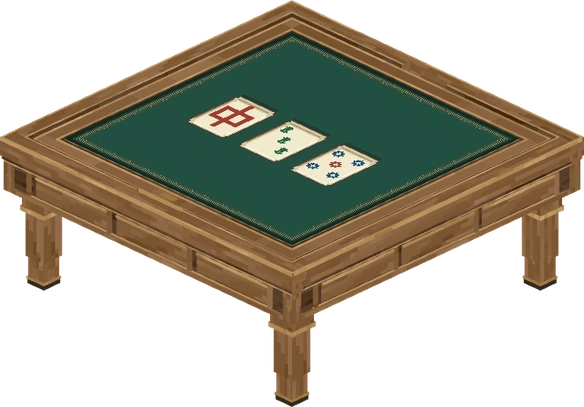
Section titled “Getting a board”Craft a Riichi Mahjong Board and fit it into a Large Game Table. Place matching Game Chairs facing the table, then take a seat.


- 1 ×Bamboo
- 7 ×Any planks
- 1 ×White wool
How to play
Section titled “How to play”Open the fitted board to make your moves. How to play in the side tray gives you the same lessons with illustrations inside the game.
Build a winning hand
Section titled “Build a winning hand”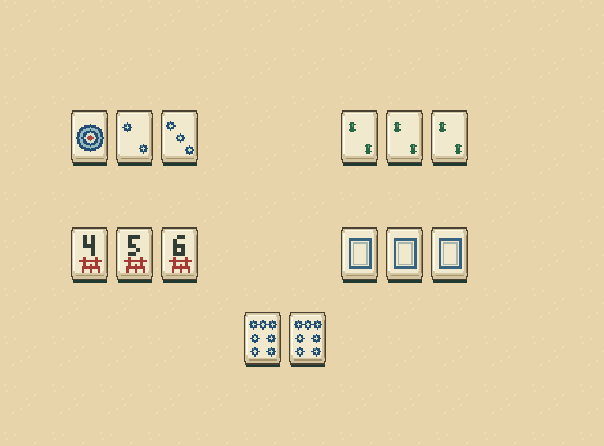
Usually collect four groups of three, plus two matching tiles.
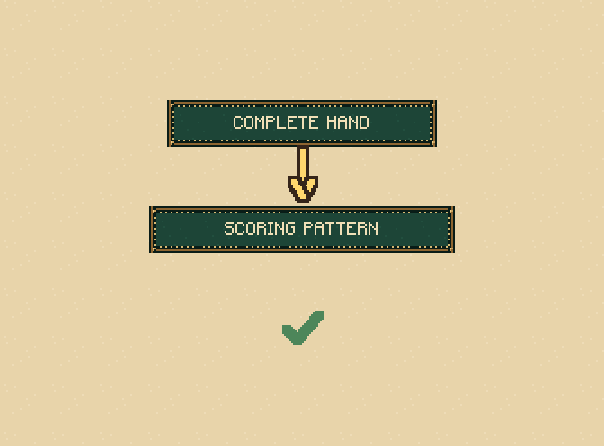
A complete hand also needs a yaku: a scoring pattern. The game checks this for you.
Learn the three suits
Section titled “Learn the three suits”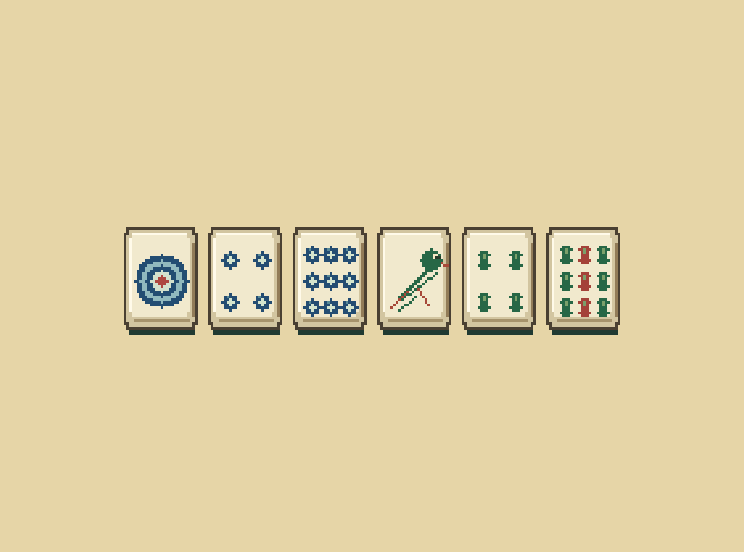
Each suit has numbers one to nine. There are four copies of every tile.
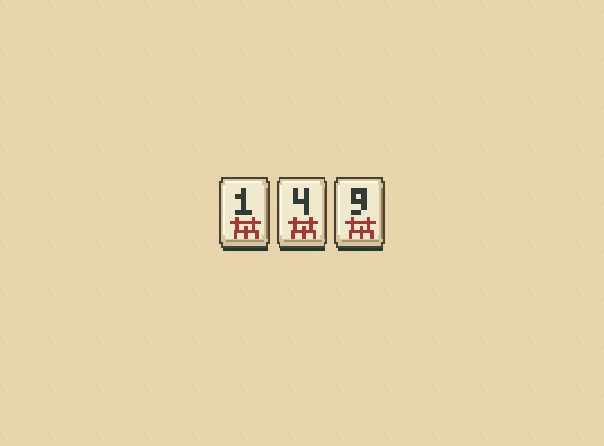
The large number tells you its rank. The red mark identifies the character suit.
Winds and dragons
Section titled “Winds and dragons”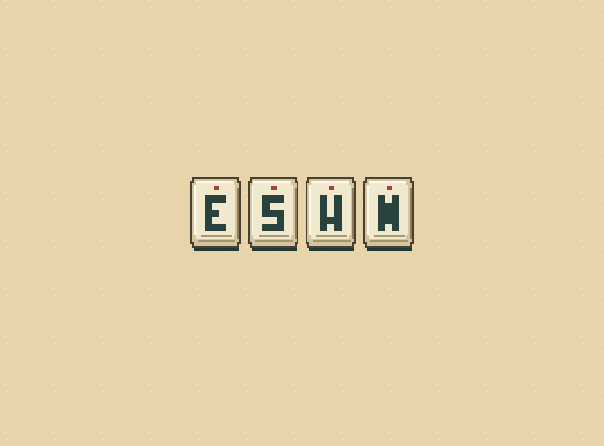
East, South, West and North are honor tiles. They do not form runs.
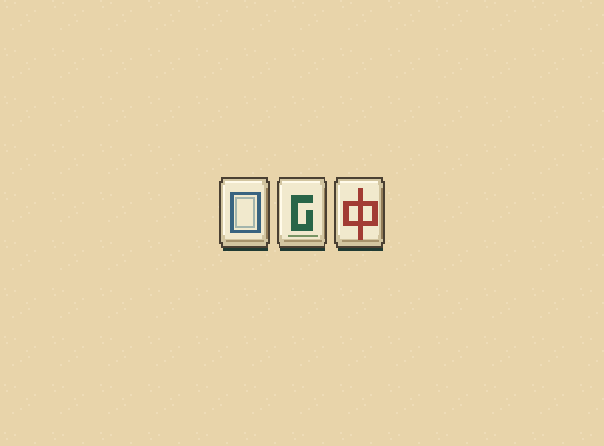
White, green and red are honor tiles too. Three matching dragons score a yaku.
Make groups
Section titled “Make groups”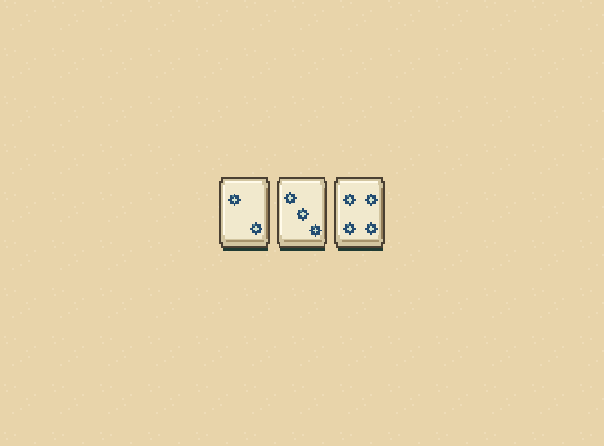
Three consecutive numbers, all in the same suit. For example: two, three, four dots.
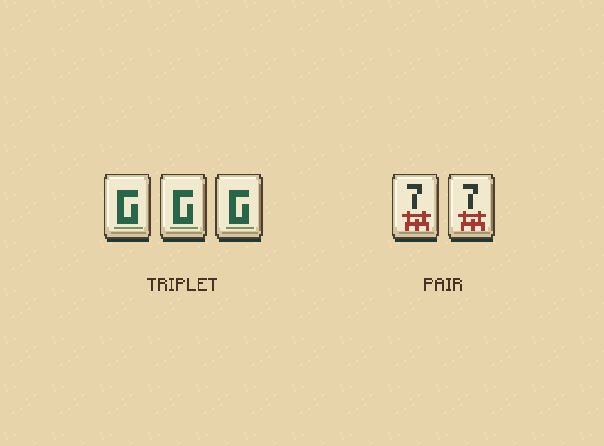
A triplet has three identical tiles. A pair has two identical tiles.
Take your turn
Section titled “Take your turn”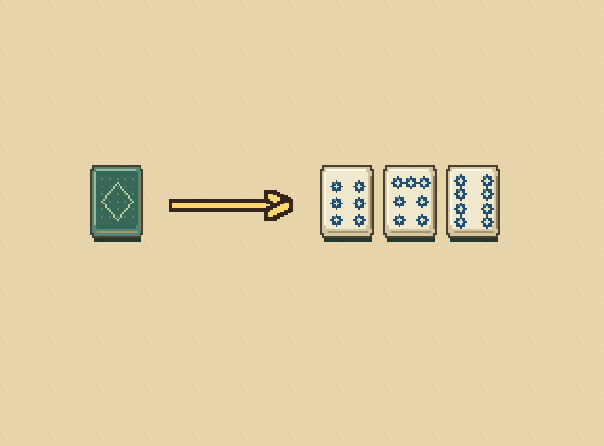
You draw a tile automatically when your normal turn starts.
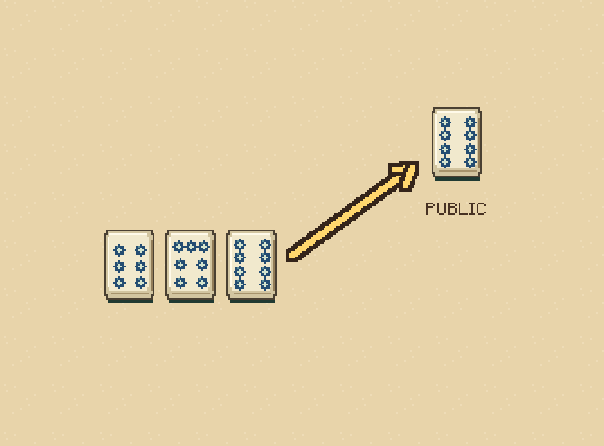
Select a tile, then use Discard. Everyone can see the discarded tile.
Use another player’s discard
Section titled “Use another player’s discard”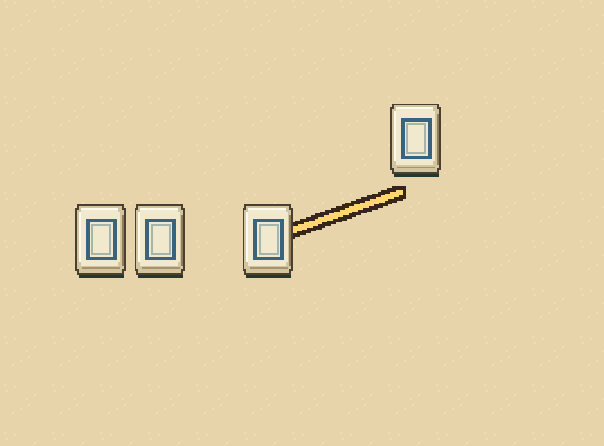
Choose Triplet to combine a discard with two matching tiles. Your group becomes public.
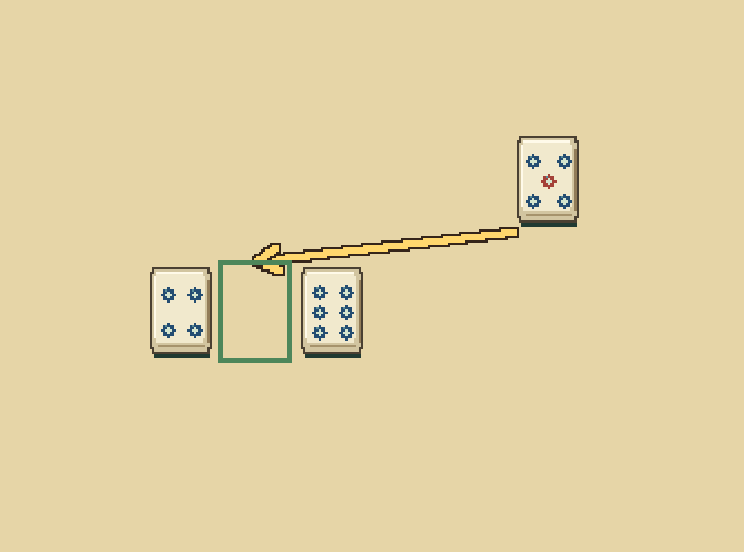
Only the next player in turn order may claim a run. Choose which run you want.
Respond, then play
Section titled “Respond, then play”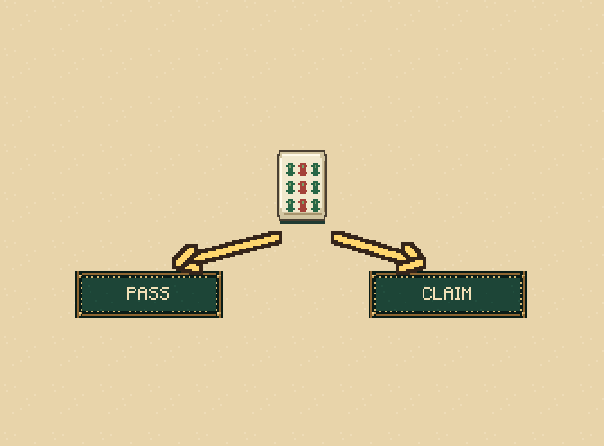
When someone discards, choose a claim or Pass. Claims are resolved after everyone replies.
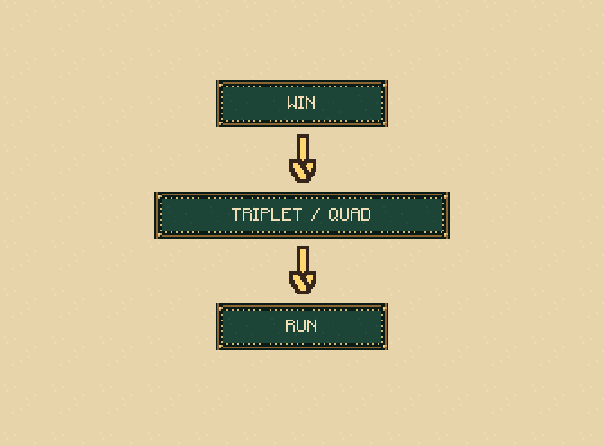
A win beats a group claim. Triplets and quads beat runs. Tied wins use turn order.
Two ways to win
Section titled “Two ways to win”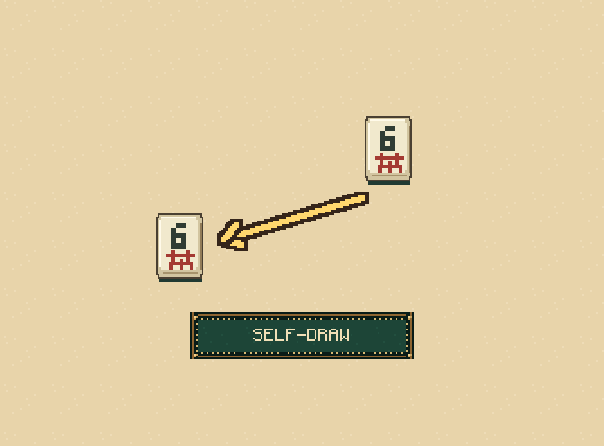
If the tile you draw completes a scoring hand, choose Win. This is called tsumo.
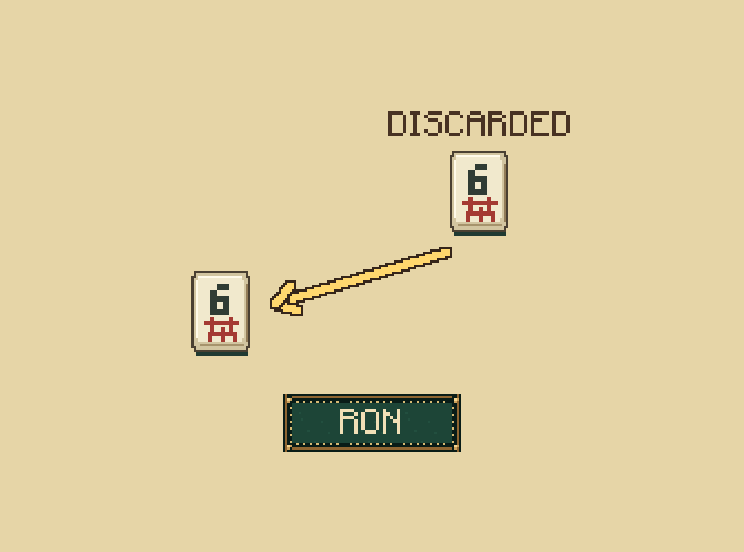
You may use an opponent's discard to finish any group or your pair. This is called ron.
Riichi: declare you are ready
Section titled “Riichi: declare you are ready”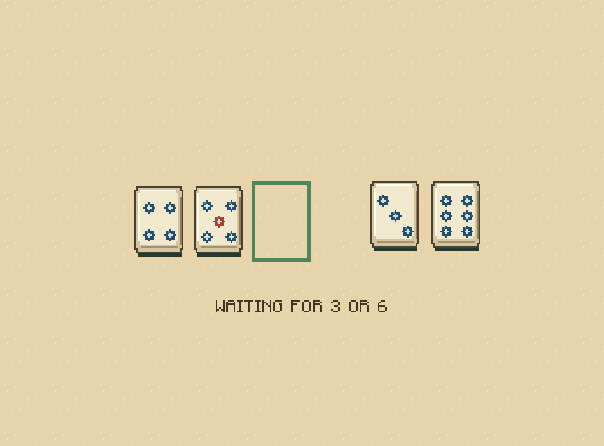
With a closed hand, select a discard that leaves you one tile from winning. Choose Riichi.
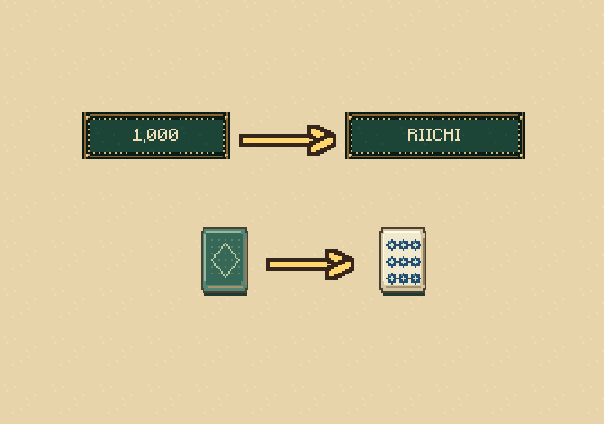
Riichi costs 1,000 points and supplies a yaku. Afterward, keep your hand and discard new draws unless you win.
Easy scoring patterns
Section titled “Easy scoring patterns”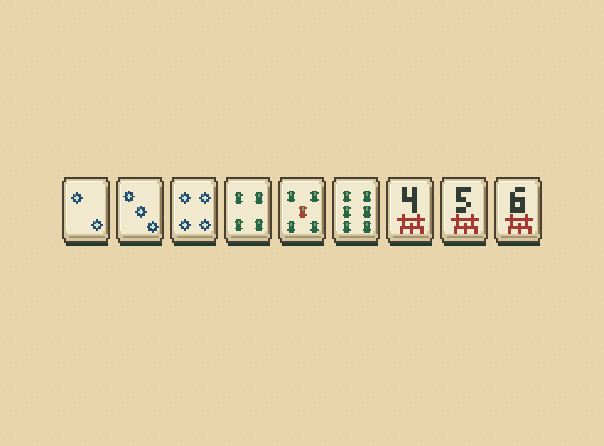
Use only numbered tiles two through eight. No ones, nines, winds or dragons.
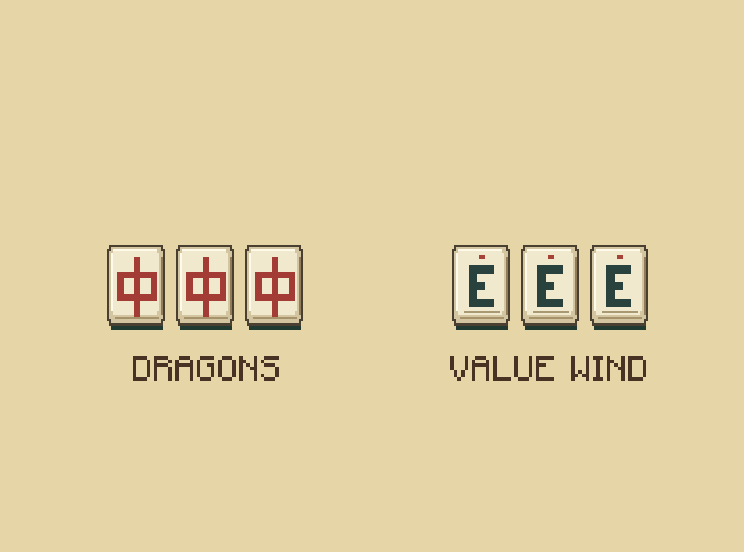
A triplet of dragons, your seat wind or the round wind supplies a yaku.
Keep it closed
Section titled “Keep it closed”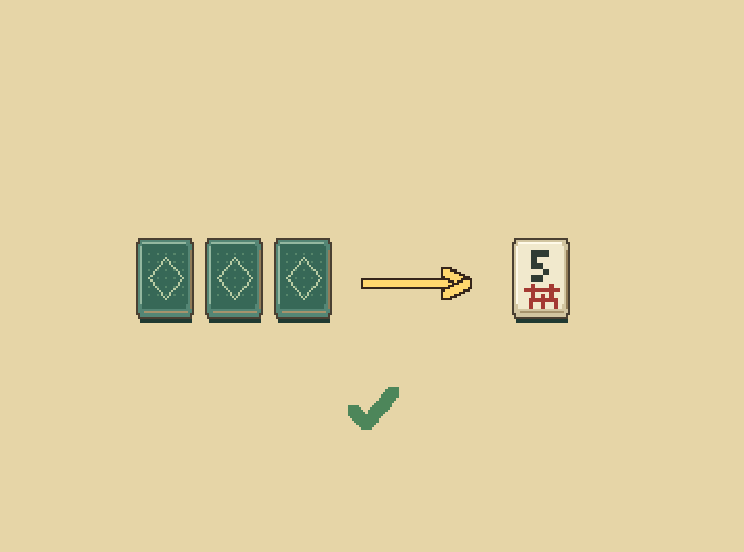
Win by drawing the final tile without having called an open group. This supplies a yaku.
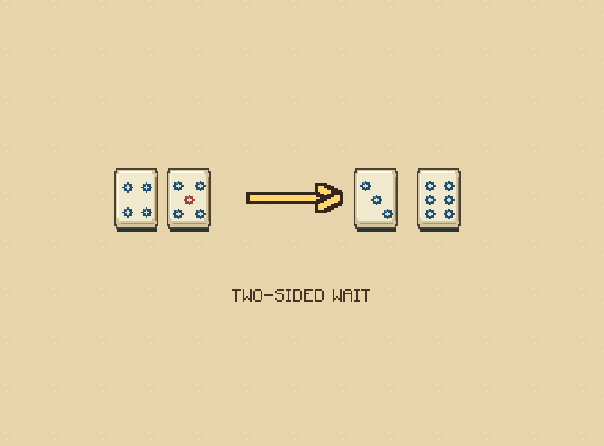
Four runs, a non-value pair, and a two-sided run wait score Pinfu when your hand stays closed.
Four matching tiles
Section titled “Four matching tiles”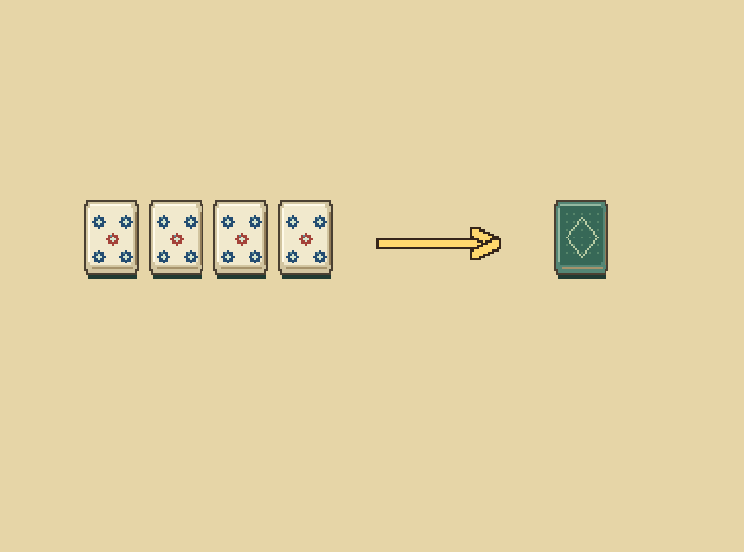
A quad uses four identical tiles. You receive a replacement tile and reveal another bonus indicator.
After calling a run or triplet, discard next. After Riichi, a quad must preserve your waits and structure.
Bonus tiles
Section titled “Bonus tiles”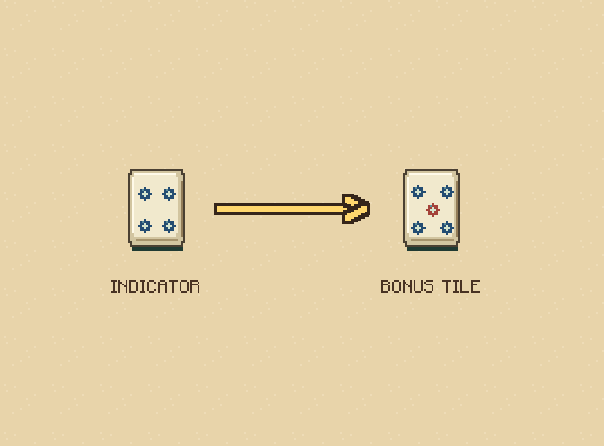
A shown indicator makes the next tile in its suit a bonus tile. Nine wraps around to one.
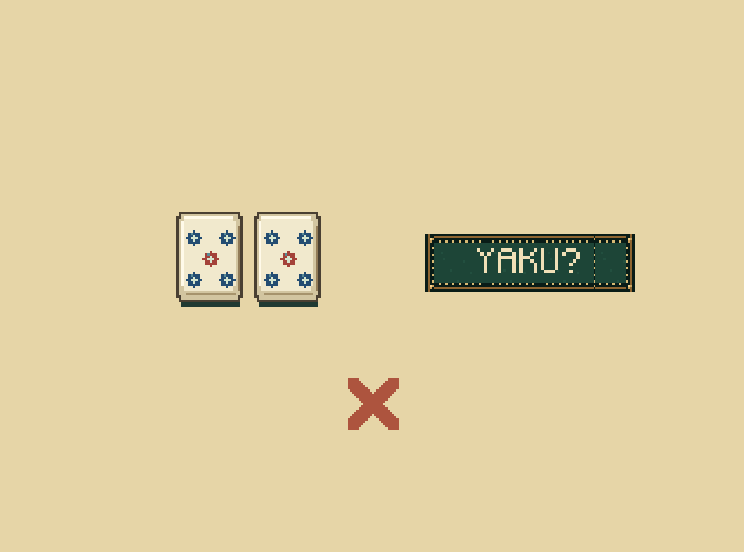
Dora increases a valid hand's score. Dora alone never makes a hand eligible to win.
The wall runs out
Section titled “The wall runs out”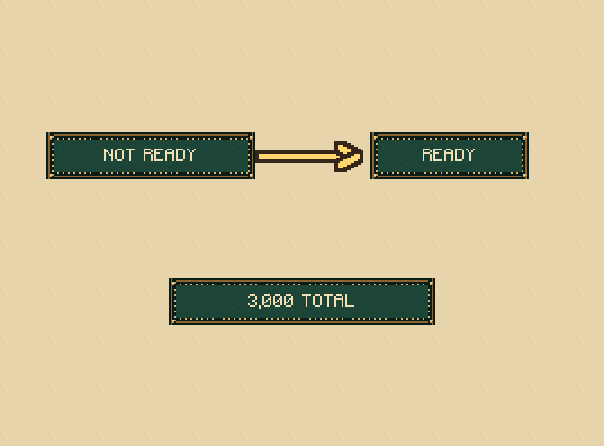
At a draw, reveal if ready. Not-ready players share a 3,000-point payment to ready players.
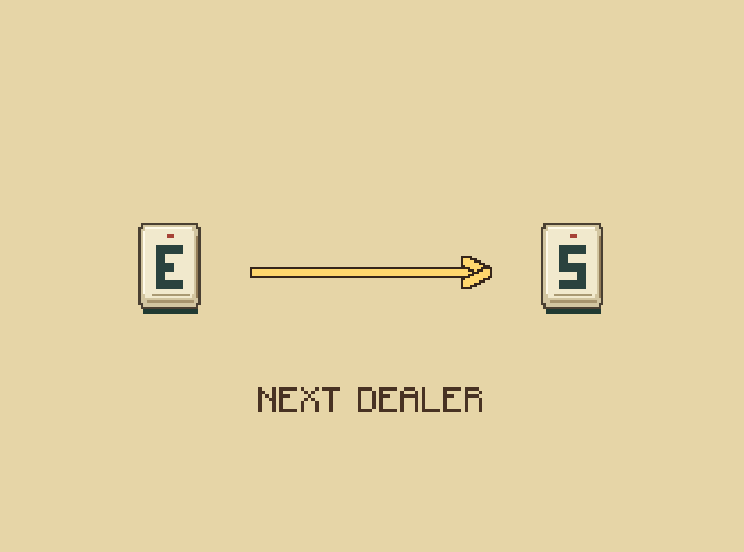
The dealer stays East after winning or revealing a ready hand at a draw. Otherwise the dealer moves on.
Win the match
Section titled “Win the match”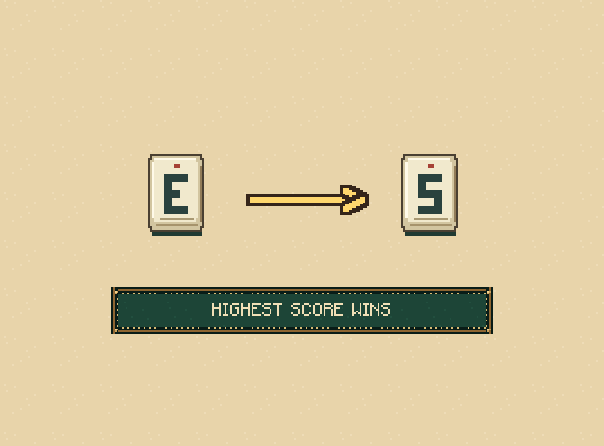
Start with 30,000 points each. Play through the East and South rounds; the highest final score wins.
The game calculates points and payments. Item wagers stay separate from these game points.
Rules in more detail
Section titled “Rules in more detail”Your discards matter
Section titled “Your discards matter”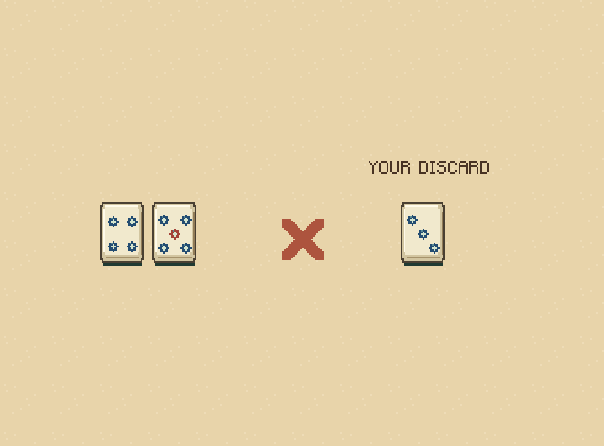
If any tile that completes your hand is in your own discard history, you cannot win on a discard.
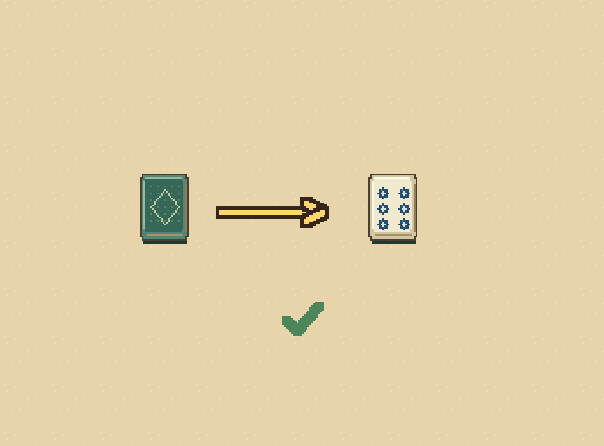
Draw the winning tile yourself, or change your hand's waits if you have not declared Riichi.
Passing a win
Section titled “Passing a win”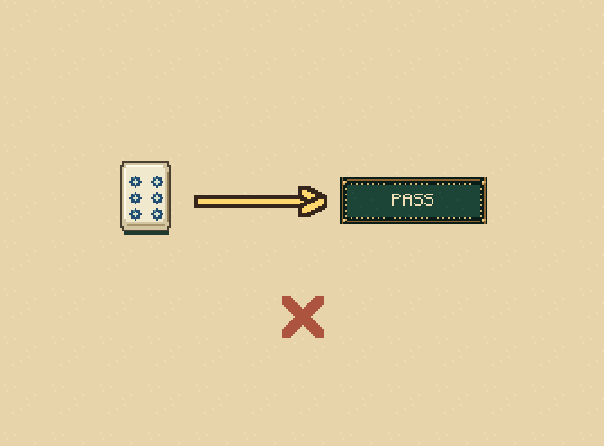
Passing a tile that completes your hand blocks discard wins until your next draw or group claim.
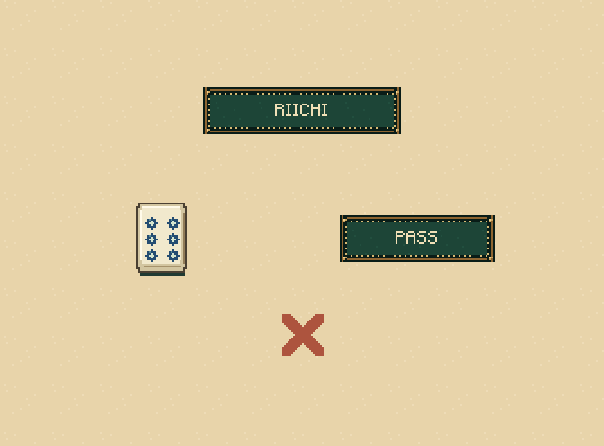
After Riichi, passing that tile blocks discard wins for the rest of the hand. Self-draw still works.
Special hands
Section titled “Special hands”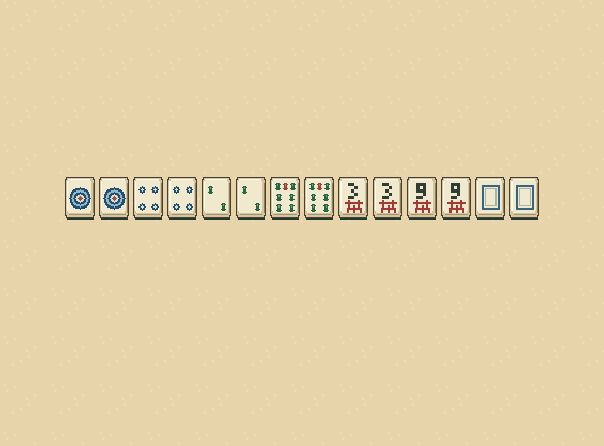
Collect seven different pairs. Four identical tiles cannot count as two pairs.
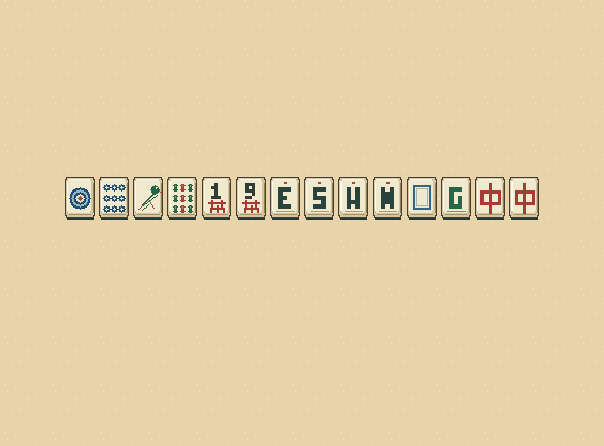
One of every one, nine, wind and dragon, plus one matching duplicate, forms a rare limit hand.
Yaku, furiten and competing claims
Section titled “Yaku, furiten and competing claims”A complete-looking hand needs a valid yaku; dora add value but do not provide a yaku by themselves. Furiten prevents ron, including when your own discards contain a winning tile. Passing a possible ron can also restrict later claims, with stricter consequences after riichi. Tsumo is assessed separately. Discard responses are collected before resolution: ron takes priority over pon or kan, with chi considered afterwards. Chi is available to the next player in turn order. Players begin with thirty thousand points. Private tiles remain concealed while claims are considered.
Keep playing
Section titled “Keep playing”Use Rematch after the result to play again. To pause an unfinished match, the table owner can remove and keep its board.
See seats and solo play for multiplayer and Play alone, or item stakes if you want to agree on a pot.